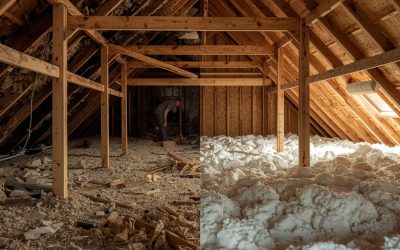
Most homeowners wish they had just a little more space. Your attic often seems like the perfect place to hide holiday decorations or seasonal gear. However, accessing that space requires more than just cutting a hole in the ceiling. A poorly installed attic ladder can weaken your home structure, cause injury, or ruin your energy efficiency.
Building safe attic access requires planning. You must consider how the new opening affects your insulation and airflow. If done incorrectly, you might create drafts or even moisture problems. Here is how to approach the project with safety and efficiency in mind.
Safety Comes First When Building an Attic Ladder
The structural integrity of your home is the most important factor. You should never cut into a structural truss without proper engineering or reinforcement. Cutting a truss can compromise the roof support system. You must frame the opening with headers to distribute the weight correctly.
Placement is also critical for safety. You need enough landing space at the bottom of the ladder to climb up and down safely. Do not position the opening in a cramped closet or directly over a stairway. Finally, check the load rating of the ladder kit you choose. Ensure it can support your weight plus the weight of the heavy boxes you plan to carry.
Designing Attic Access for Storage Use
Once you have safe access, you need a safe place to stand. You cannot simply walk on the ceiling joists or the drywall. One misstep could send your foot right through the ceiling below. You need to install proper flooring or decking.
Consider what you plan to store. Heavy items require a stronger floor structure. An effective attic storage solution provides a stable platform that distributes weight evenly across the joists. When choosing a ladder, pick one with wide steps and a handrail. This makes carrying items much safer than using a steep, narrow ladder.
Energy Efficiency and Insulation Considerations
Cutting a 10-square-foot hole in your ceiling creates a massive air leak. In the winter, your warm air rises and escapes into the cold attic. In the summer, the extreme attic heat pushes down into your home. This forces your HVAC system to work harder.
You must seal the gap between the rough opening and the ladder frame. Many homeowners look for attic insulation repair services to help build an insulated cover or “dam” around the opening. This prevents insulation from falling through and stops air transfer. Using spray foam insulation Toledo Ohio residents rely on is an excellent way to seal the small gaps around the ladder frame to stop drafts permanently.
Moisture, Mold, and Long-Term Protection
Air leaks do more than just waste energy. They also carry moisture. When warm, humid air from your shower or kitchen leaks into a cold attic, it condenses on roof sheathing. This wet environment creates the perfect conditions for mold growth.
The ladder opening must be airtight when closed. Weatherstripping around the hatch is essential. Without it, you risk creating a moisture problem that requires attic moisture control services later. Protecting your home from mold starts with controlling airflow. A properly sealed attic access point keeps the moisture in your living space where it belongs, rather than letting it drift into the attic.
Conclusion
Adding an attic ladder is a great way to improve your home storage. It adds value and convenience when done correctly. By focusing on structural safety, proper flooring, and tight air sealing, you can enjoy the extra space without raising your energy bills.
If you have questions about your attic structure or insulation needs, our team is ready to assist.
Schedule a professional attic inspection
FAQs
- Can I cut a truss to install an attic ladder?
No — you should never cut a structural truss without professional guidance. Trusses are engineered to support your roof, and cutting one can weaken the entire structure. If your attic ladder needs to go in an area with trusses, a contractor or engineer can recommend the safest framing solution.
- How do I stop drafts and heat loss around an attic ladder?
The key is airtight sealing and insulation. You should seal the gap between the ladder frame and the rough opening, and also make sure the attic hatch closes tightly with weatherstripping. Many homeowners use spray foam insulation to permanently seal small cracks and stop airflow.
- Is it safe to store heavy items in the attic once the ladder is installed?
Only if the attic floor is built for it. Most attics are not designed for heavy storage unless proper decking and support are added. Walking or stacking boxes directly on ceiling drywall is dangerous and can cause damage. If you plan to store heavier items, it’s smart to install flooring that distributes weight safely across the joists.